
By Jerry Poore, Owner, I-80 Trailers
From field repairs to equipment hauling, the best farm trailer is the one set up for the jobs that cost you the most time when they go wrong.
When a tractor or planter quits a mile from the shop, the repair itself isn't always what eats up the day. It's the trips back for the right socket, another hydraulic fitting, a charged battery, or the part you thought was already in the truck. On a farm, a trailer isn't just something you pull. The right setup can keep equipment moving, protect tools and supplies, and cut down on wasted trips.
There is no single trailer that is best for every farm. A trailer built to haul a skid steer has a different job than one used for fencing supplies, seed, or in-field repairs. The better question is simple: What work do you need the trailer to handle most often, and what load creates the biggest problem when the trailer is undersized or poorly set up?
Start With the Job, Not the Trailer
Before comparing lengths, axles, ramps, or options, make a list of the work the trailer will actually do. Include the weight and dimensions of your equipment, but don't stop there. Attachments, fuel, tools, spare parts, tanks, and materials all count toward the load. A compact tractor may fit on the deck, for example, but the loader, bucket, or mower attachment can change the space and payload you need.
Also think about where you will load and unload. A low deck and manageable ramp angle can matter on uneven ground. Good tie-down access matters when you are securing equipment in the dark or trying to beat the weather. If the trailer will travel between fields, farms, or jobsites, towing comfort and the limits of the tow vehicle matter just as much as capacity on paper.
Enclosed Cargo Trailers: A Mobile Farm Shop
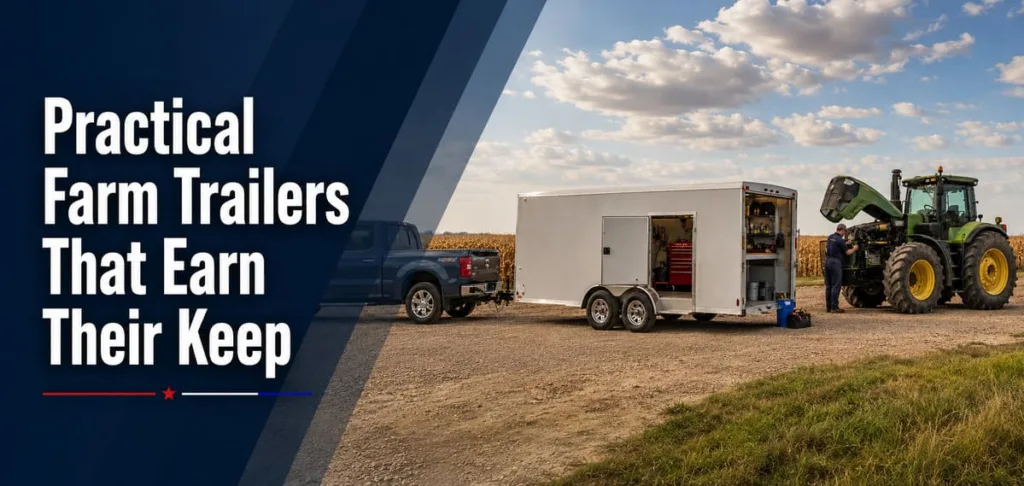
An enclosed cargo trailer is easy to overlook in agriculture because it doesn't haul a tractor or dump a load of rock. What it can do is bring the shop to the field. For farms that handle a lot of their own maintenance, that can make an enclosed trailer one of the most useful setups on the property.
Instead of loading and unloading tools for every repair, the trailer can stay stocked with the items your crew reaches for most:
- Hand & cordless tools
- Chargers
- Hydraulic fittings
- Electrical supplies
- Grease
- Filters
- Belts
- Bearings
- Hoses
- Fasteners
- Jacks
- Blocking
- Common replacement parts
Shelving and labeled bins keep small pieces from turning into a pile on the floor. A workbench gives you a clean place to repair a component instead of balancing it on a tailgate.
The biggest benefit is not that an enclosed trailer looks organized. It's that the setup saves trips. If a combine, planter, hay baler, or irrigation unit goes down, you can pull the repair trailer to the equipment and have a better chance of finishing the job where it sits. During planting or harvest, getting even an hour back can matter.
What to Consider in a Mobile Repair Trailer
Start with payload. Tools, a compressor, a generator, spare parts, fluids, a workbench, shelving, and batteries get heavy faster than most people expect. The trailer's payload is not the same as its GVWR. Payload depends on the trailer's rated capacity minus its empty weight, and installed equipment reduces what remains.
Payload Capacity = GVWR - Trailer Weight
Example. A trailer may have:
- GVWR: 14,000 lbs.
- Empty trailer weight: 4,000 lbs.
That means your actual payload capacity is 10,000 lbs. Not 14,000.
Check the manufacturer's ratings and the trailer data plate instead of guessing.
Next, plan the layout around how people will work inside. Put frequently used tools where they are easy to reach. Keep heavier items low and secured so they cannot move during transport. Leave a clear walkway, and make sure doors, cabinets, and drawers will stay latched on rough roads. Interior lighting, exterior work lights, and enough outlets can turn a basic cargo trailer into a much more capable repair space. Power systems, fuel, compressed-gas cylinders, welding equipment, ventilation, and fire protection need to be installed and used correctly for the equipment involved.
Door choice matters, too. A rear ramp can help with rolling toolboxes, welders, or other heavy equipment. Barn doors may make sense when the trailer will often be backed up near a ditch, building, or narrow work area. A side door gives quick access without opening the entire rear of the trailer. The right answer depends on where the trailer will be used and what needs to go in and out.
Finally, think about security and weather. An enclosed trailer keeps tools and parts out of rain, dust, and direct sun while giving you a lockable space when the day is done. That does not replace good inventory habits, but it is a major step up from carrying expensive tools loose in a pickup bed.
Equipment Trailers: Built for Tractors, Skid Steers, and Attachments
When the main job is moving machinery, an equipment trailer is usually the better fit. Deck length, payload, axle ratings, ramp style, tie-down locations, and load angle all need to match the equipment. Measure the machine with the attachment installed, and account for how the weight is distributed. A trailer can be long enough and still be the wrong setup if the load cannot be positioned for proper tongue weight.
For heavier or longer loads, a deckover/flatbed or gooseneck trailer may provide the capacity and deck space the job requires. The tradeoff is a higher deck and, depending on the setup, a steeper loading angle. That may be fine for some tractors and machines but less convenient for low-clearance equipment. Match the trailer to the machine you own now, while leaving reasonable room for the equipment you expect to add.
Dump Trailers: More Than Dirt and Rock
Dump trailers earn their keep on farms because they reduce hand unloading. They can handle jobs such as moving gravel, soil, mulch, demolition material, scrap, and other loose loads when the trailer is designed and rated for the material. They are also useful for cleanup around buildings, fence lines, and acreage projects.
The common mistake is judging a load by the amount of space it takes up. Dense material can put a trailer over its payload before the bed looks full. Know the approximate weight of the material, stay within the trailer and tow vehicle ratings, and load it so the weight is properly distributed.
Utility Trailers: The Farm's Everyday Hauler
For mowers, ATVs, small equipment, fencing supplies, feed, and general property work, an open utility trailer is hard to beat for simple loading and visibility. It is usually easier to access from the sides than an enclosed trailer and can be a practical choice for frequent short trips around the farm.
Pay attention to gate capacity, ramp angle, deck width, side height, tie-down points, and payload. If an ATV/UTV fits but the sprayer, mower deck, or other attachment hangs over or blocks securement points, the trailer is not truly big enough for the job.
6 Questions to Ask Before Buying a Farm Trailer
1. What is the heaviest complete load?
Add the machine, attachment, tools, fluids, parts, and materials—not just the main piece of equipment.
2. How much deck or interior space is actually needed?
Measure length, width, height, and clearance with attachments in the position used for transport.
3. Where will it be loaded and unloaded?
Field entrances, soft ground, slopes, narrow lanes, and low-clearance areas can affect deck and door choices.
4. How will the load be secured?
Make sure rated tie-down points are accessible when the trailer is loaded and that the securement method fits the equipment.
5. What can the tow vehicle safely handle?
Confirm towing capacity, hitch rating, brake requirements, and the truck's payload limits for the complete setup.
6. Will the trailer still fit the operation in a few years?
Buying for one exact machine can create another purchase when the farm adds an attachment or replaces equipment.
Choose the Trailer That Solves a Real Problem
The best farm trailer is not always the biggest or most expensive one on the lot. It is the trailer that fits the equipment, handles the weight, works with the tow vehicle, and makes everyday jobs easier. For some operations, that is an equipment trailer or dump trailer. For others, an enclosed cargo trailer set up as a mobile repair shop may save more time than anything else they pull.
Before you buy, bring the details:
- What you haul
- What it weighs
- How it is equipped
- Where you use it
- What you tow with
The team at I-80 Trailers can help you compare enclosed cargo, equipment, dump, and utility trailer options and find a setup built for the work you actually do.